The 2nd Sino-Europe Workshop on Lunar Gravitational Wave Detection
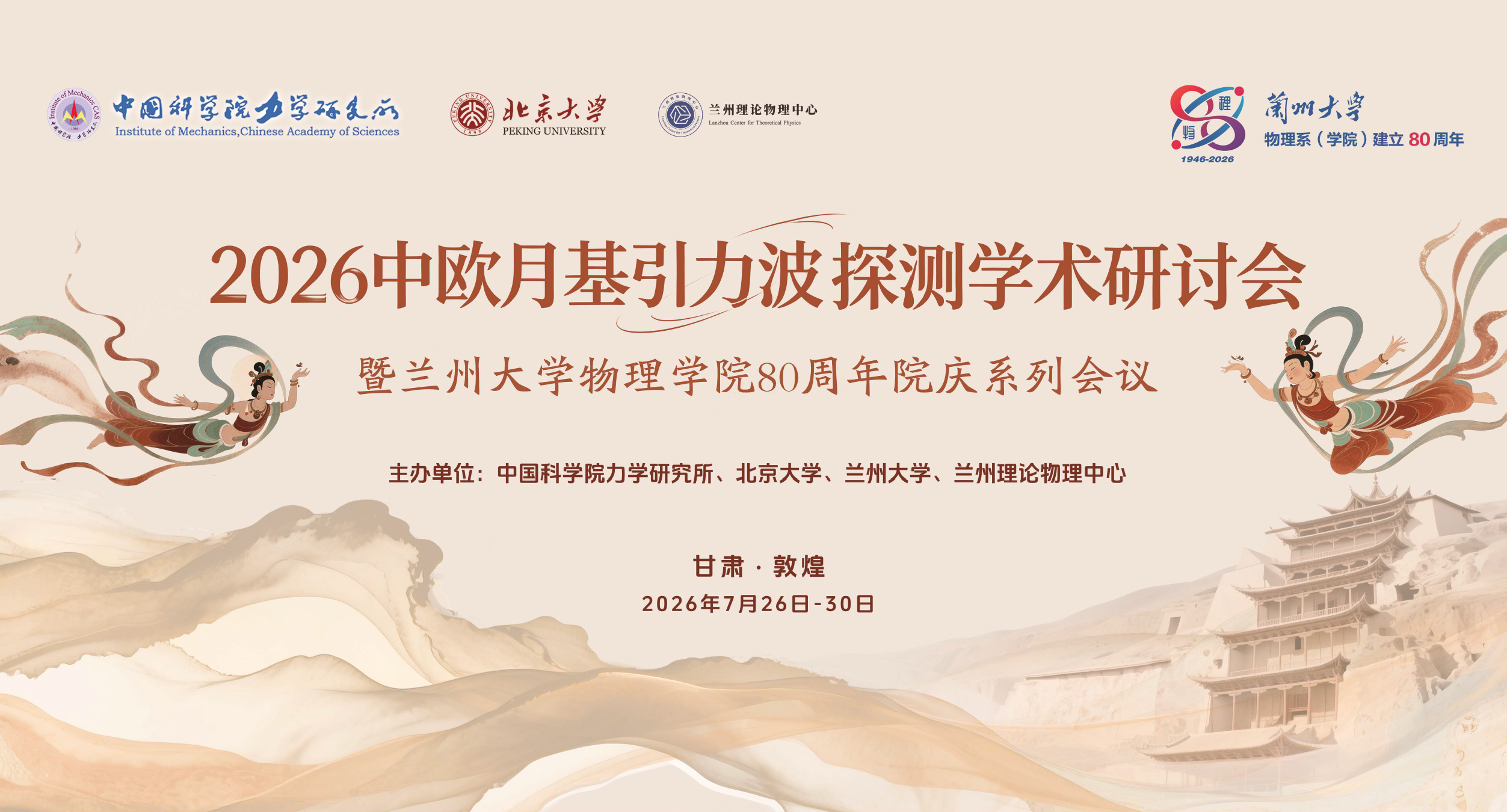
Announcement: 2nd Sino-Europe Workshop on Lunar Gravitational Wave Detection
26-30 July 2026, Dunhuang, China
Following the success of the inaugural meeting in 2024, we are pleased to announce the 2nd Sino-Europe Workshop on Lunar Gravitational Wave Detection, to be held in Dunhuang, China.
Rationale
Lunar gravitational wave detection is transitioning from theoretical exploration to mission reality. The LGWA (Lunar Gravitational Wave Antenna) concept has matured into a detailed mission design. Concurrently, China’s Chang’e‑7 mission is scheduled for 2026, and will carry a high‑precision seismometer to the lunar south pole, offering the first opportunity to characterize the Moon’s seismic environment with modern instrumentation.
These developments create both opportunity and urgency to address critical questions such as: What scientific breakthroughs will lunar GW missions bring? How does real lunar structure modulate the seismic response across frequency bands relevant to GW detection? Can GW-induced signals be reliably distinguished from intrinsic lunar noise (moonquakes, thermal fluctuations, meteoroid impacts)? What instrument performance can be realistically achieved under lunar surface conditions?
The first Sino-Europe workshop held in 2024 established a collaborative foundation, bringing together gravitational physicists, planetary seismologists, and instrument engineers. The second meeting aims to advance this integration, bridging theoretical modeling with experimental development.
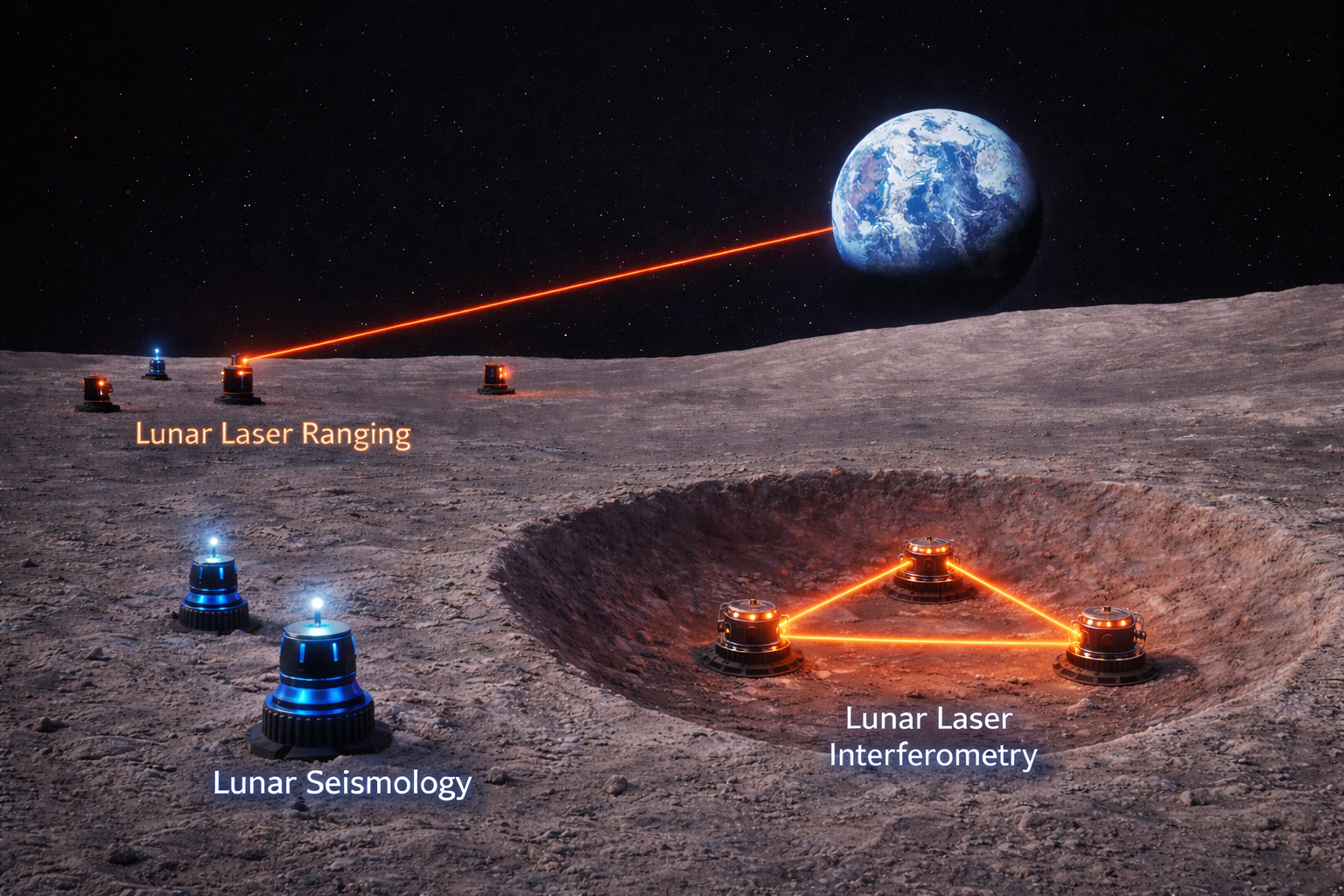
Conceptual illustration of the Lunar GW instrument (generated by ChatGPT)
Join Us in Dunhuang
Dunhuang offers a uniquely fitting setting for this gathering. Situated along the ancient Silk Road and at the edge of the Gobi Desert, the city has long been a crossroads of cultures, ideas, and traditions. Its extraordinary historical legacy, most notably the Mogao Caves, reflects centuries of exchange across civilizations and continues to inspire reflection on humanity’s shared pursuit of knowledge, creativity, and discovery.
This spirit of connection and exploration closely resonates with the aim of this workshop: to bring together researchers from different backgrounds to exchange ideas, build collaborations, and look toward new scientific frontiers.
For those seeking both rigorous science and a glimpse of the sublime, Dunhuang offers a journey worth taking.
More about Dunhuang can be found here: https://www.tripadvisor.com/Attractions-g303695-Activities-Dunhuang_Gansu.html
We look forward to welcoming you to Dunhuang.

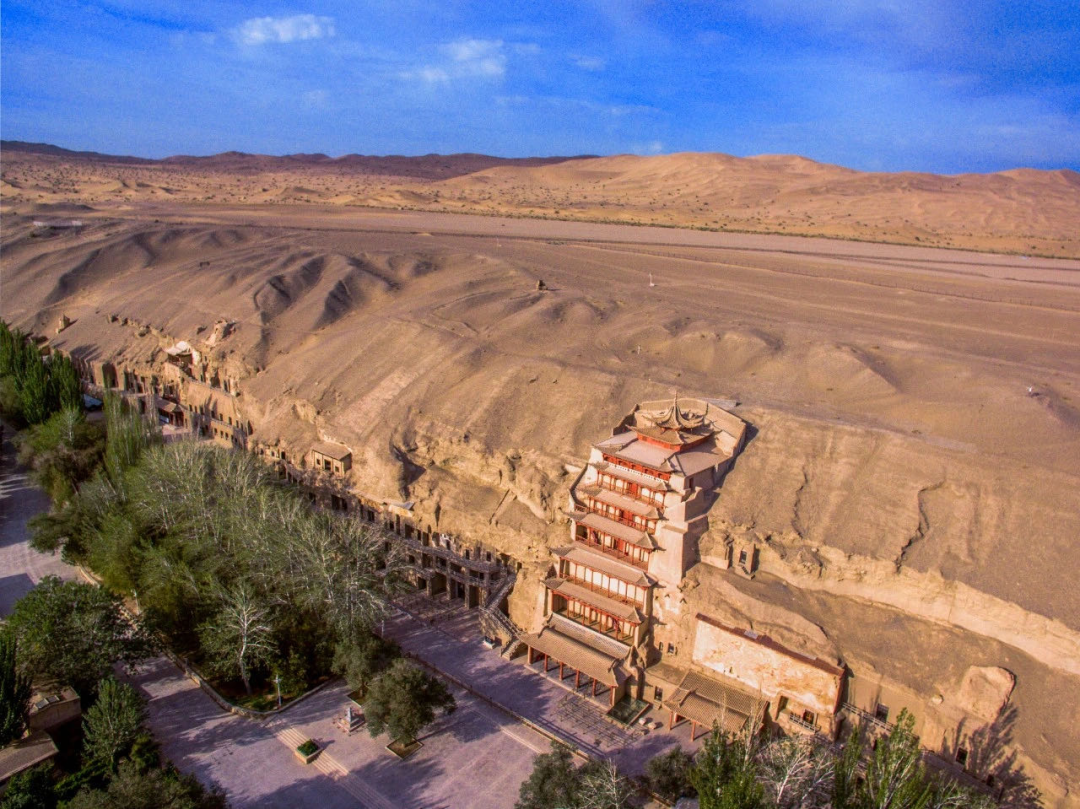
Crescent Moon Pool and the Mogao Caves (Image source: ifeng.com. All rights belong to the original copyright holder. Used here for illustrative purposes only.)
Conference Venue
Tianhe Hotel (Dunhuang) / 敦煌天河大酒店(沙州夜市鸣沙山月牙泉店)
Address: No. 106 Mingshan Middle Road, Dunhuang, Gansu, China(甘肃省敦煌市鸣山中路106号)
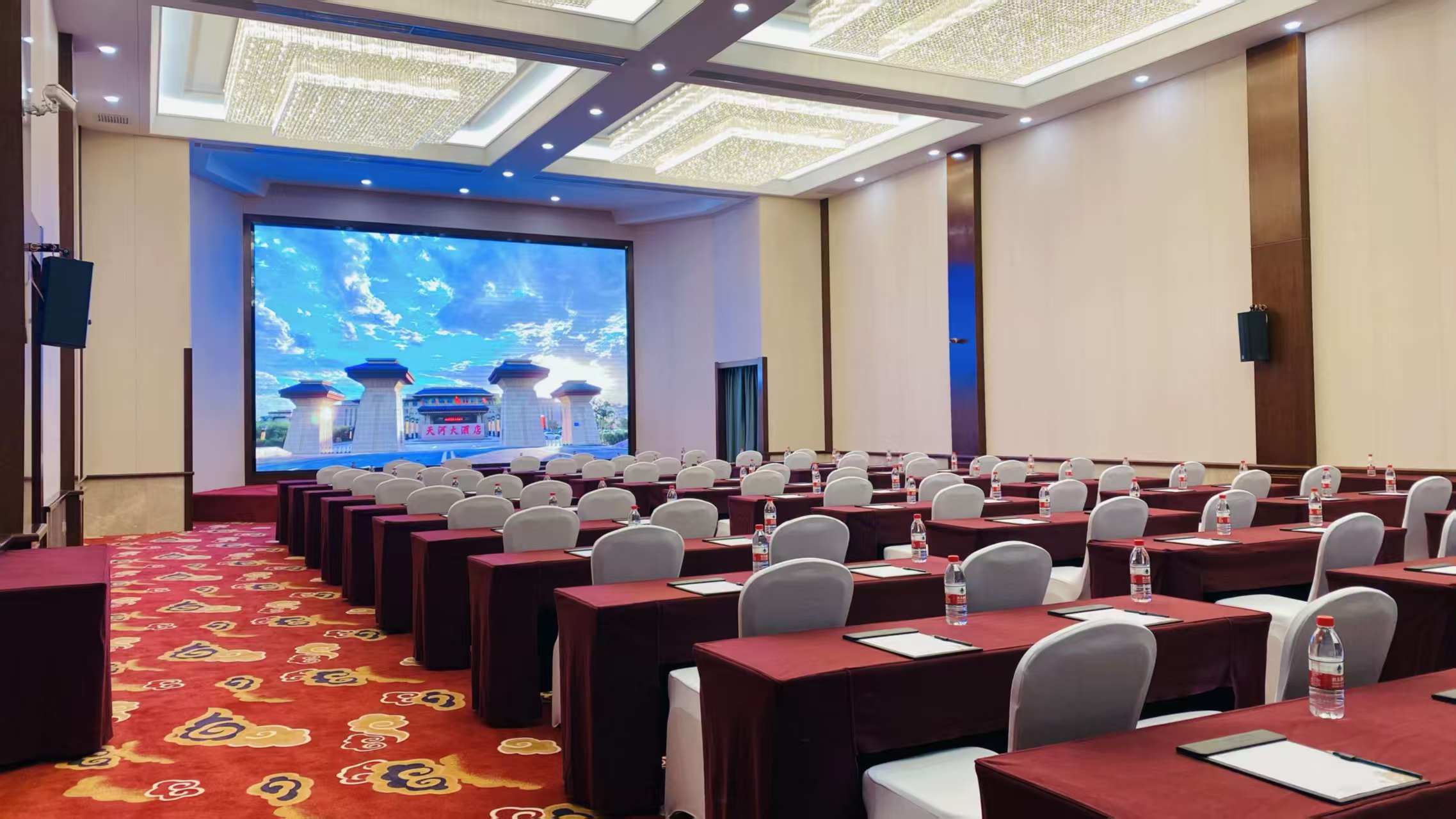
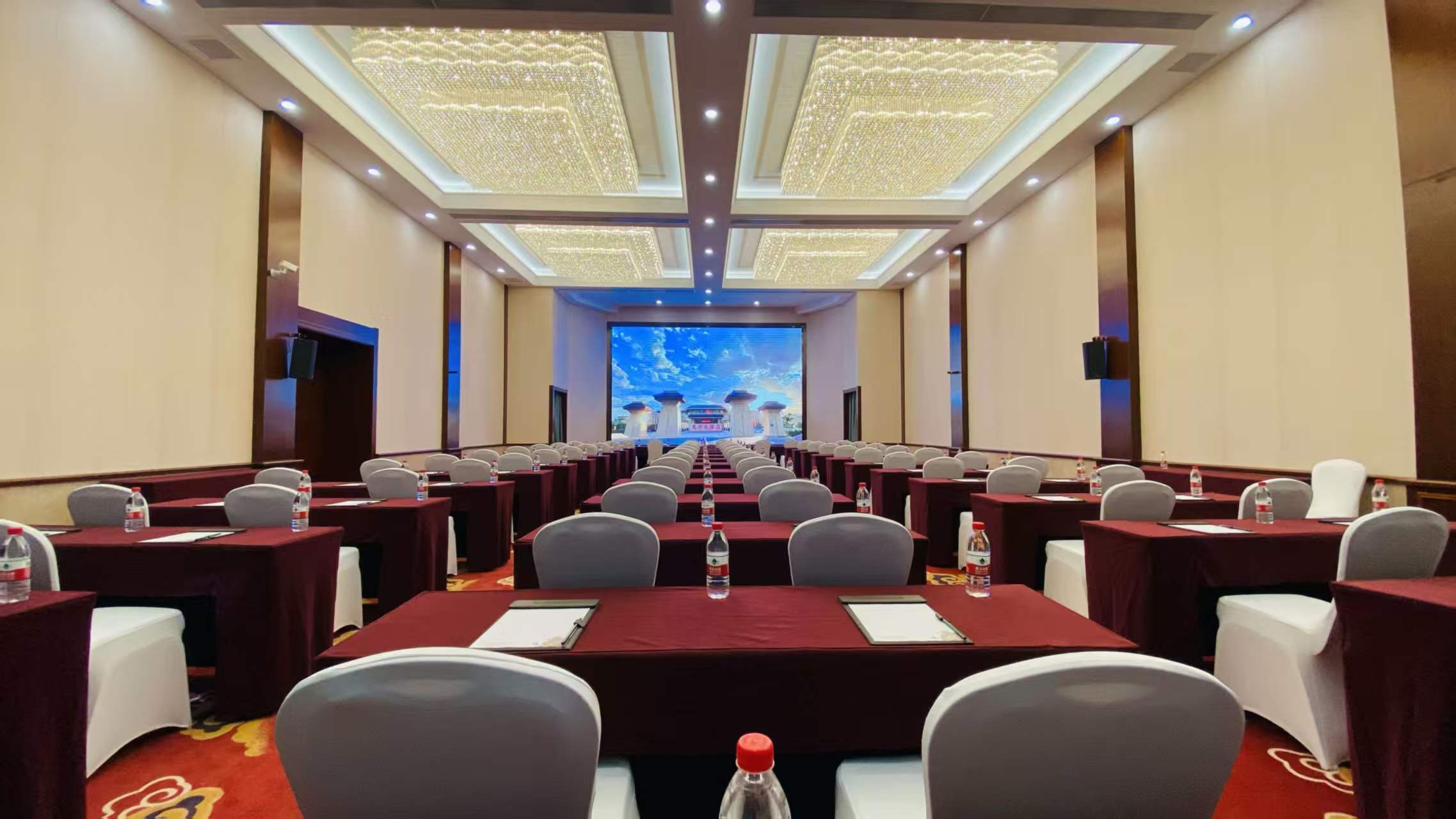
(Images are provided by the hotel for reference only)
Important Dates
25 June: Online registration closes.
26 July: Arrival and registration.
27-28 July: Talks and presentations. Conference banquet is on 27 July.
29 July: Focused discussions.
30 July: Focused discussion & departure.
Registration fee:
Academic: 1500 RMB
Student or postdoc: 800 RMB
Registration fee covers refreshments, the conference banquet, and two lunches during 27-28 July. You can pay on-site, at the registration desk.
Confirmed Participants:
- Parameswaran Ajith (ICTS)
- Pau Amaro-Seoane (Polytechnic U. of Valencia)
- Lars Anderson (KTH, Stockholm)
- Zhoujian Cao (Beijing Normal U.)
- Wenzhe Fa (Peking U.)
- Wenbiao Han (Shanghai Astronomical Obs.)
- Jan Harms (GSSI)
- Yiming Hu (Sun Yat-Sen U.)
- Hongqing Huo (Lanzhou U.)
- Dali Kong (Shanghai Astronomical Obs.)
- Haixing Miao (Tsinghua U.)
- Wei-Tou Ni (Lanzhou U.)
- Ho Jung Paik (Mariland U.)
- Lijing Shao (Peking U.)
- Sichun Sun (Beijing Inst. Tech.)
- Mengyao Wang (Beijing Normal U.)
- Gang Wang (Ningbo U.)
- Lianfu Wei (Northwestern Jiaotong U.)
- Morgane Zeoli (U. Liège, online)
- Bing Zhang (Hongkong U.)
- Fan Zhang (Beijing Normal U.)
- Lei Zhang (Inst. Geology and Geophysics, CAS)
- Xin Zhang (Northeastern U.)
- Wen Zhao (U. Science and Technology of China)
- ...
Science Organizing Committee:
- Xing Bian (IMECH-CAS)
- Xian Chen (PKU)
- Jan Harms (GSSI)
- Yu-Xiao Liu (LZU)
- Ziren Luo (IMECH-CAS)
- Peng Xu (IMECH-CAS)
- Jinhai Zhang (IGG-CAS)
- Xiao-Min Zhang (LZU/AZSPACE)
Local Organizing Committee:
- Yu-Xiao Liu (Chair)
- Shaowen Wei
- Jie Yang
- Yupeng Zhang
- Han Wang (Website maintenance)
- Jie He (Conference secretary)
- An Chen
- Andrew Lawrence Miller
- Anzhong Wang
- Baocheng Zhang
- Bing Zhang
- Changfu Shi
- Changqing Wang
- Da Huang
- Dali Kong
- Daqiang Gao
- Dijun Chen
- Dongqing Shao
- Fen Gao
- Gang Wang
- Guihao Wu
- Haibo Tu
- Hainan Lin
- Haixing Miao
- Han Wang
- Han Yan
- Hanlin Song
- He Wang
- Ho Jung Paik
- Hong Zhang
- Hongbo Jin
- Hongkun Huang
- Hongqing Huo
- Huaike Guo
- Jan Harms
- Jie He
- Jie Yang
- Jieci Wang
- Jiliang Jing
- Jin Li
- Jingfei Zhang
- Jinhai Zhang
- John J. Oh
- Jun Zhang
- Junchen Gao
- Ke Yang
- Lars Anderson
- Lei Liang
- Lei Qu
- Lei Zhang
- Lianfu Wei
- Lie Qiang
- Lijing Shao
- Linxiao Cong
- Liwei Yang
- Meng Ding
- Min Zhang
- Ming Li
- Minghui Du
- Ningbiao Tang
- Panpan Wang
- Parameswaran Ajith
- Pau Amaro-Seoane
- Peng Xu
- Pengcheng Wang
- Puxun Wu
- Qifan Li
- Qiong Deng
- Qiuhan He
- Qiyuan Pan
- Qunying Xie
- Rongzu Li
- Rui Luo
- Ruihong Yue
- Ruiqi Yang
- Shaodong Zhao
- Shaoping Shi
- Shaowen Wei
- Sichun Sun
- Songbai Chen
- Tong Liu
- Wei Bian
- Wei-Tou Ni
- Wen Zhao
- Wenbiao Han
- Wenshuai Ye
- Wenzhe Fa
- Xian Chen
- Xiangcheng Meng
- Xianhui Ge
- Xiaobin Lai
- Xiaomin Zhang
- Xin Li
- Xin Zhang
- Xing Bian
- Yanchong Liu
- Yang Li
- Yanwei Ding
- Yapeng Hu
- Yiming Hu
- Yinbowen Zhang
- Yong Tang
- Yongliang Ma
- Yuanchuan Zou
- Yulin Xia
- Yulin Yang
- Yunlong Zhang
- Yupeng Zhang
- Yuqi Dong
- Yuxiao Liu
- Yuzhi Fan
- Yuzhu Zhang
- Zebing Zhou
- Zemin Zhang
- Zhao Li
- Zhiming Cai
- Zhongguang Yang
- Zhoujian Cao
- Ziren Luo
- Zongkuan Guo