14-17 April 2026
Asia/Shanghai timezone

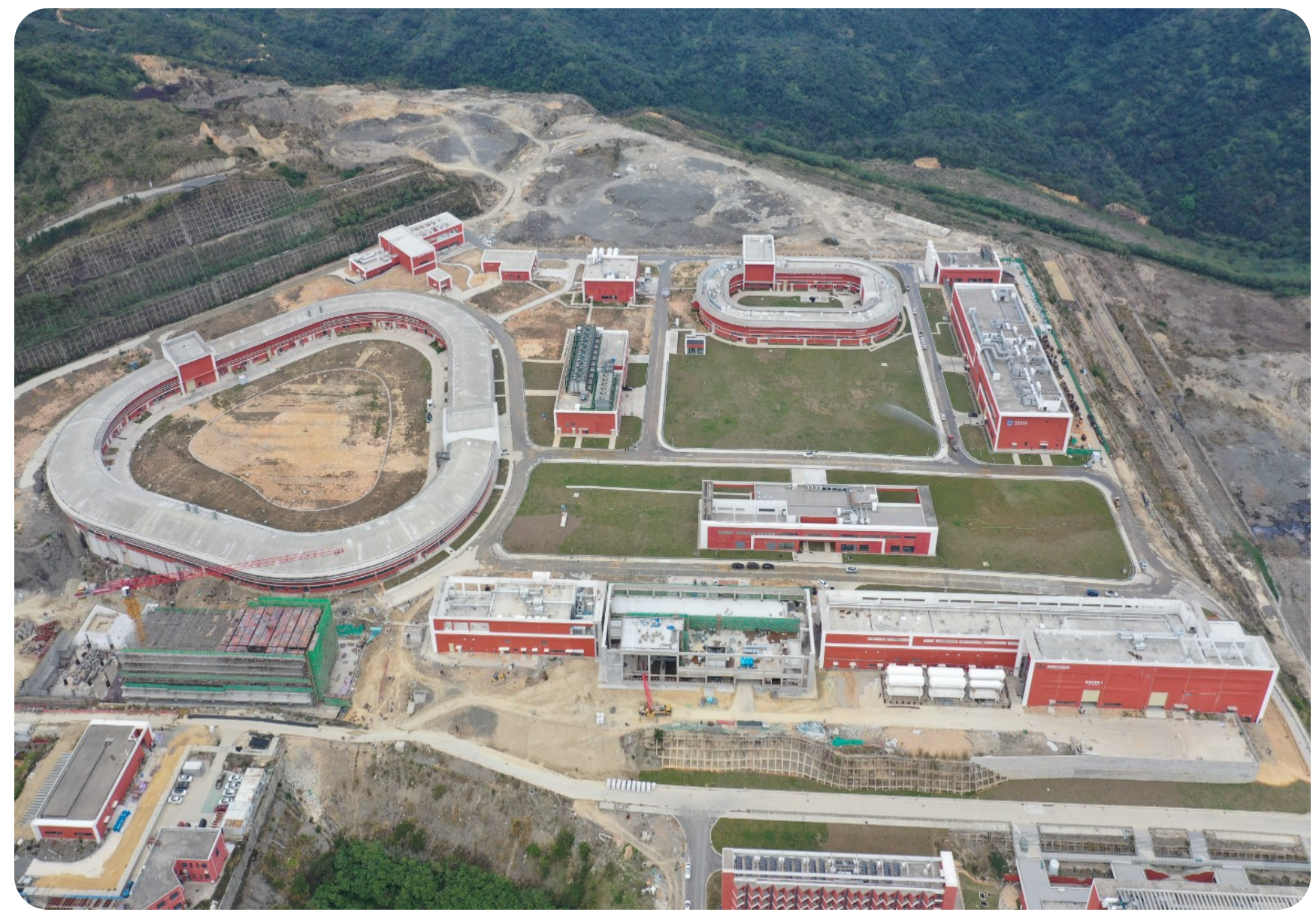
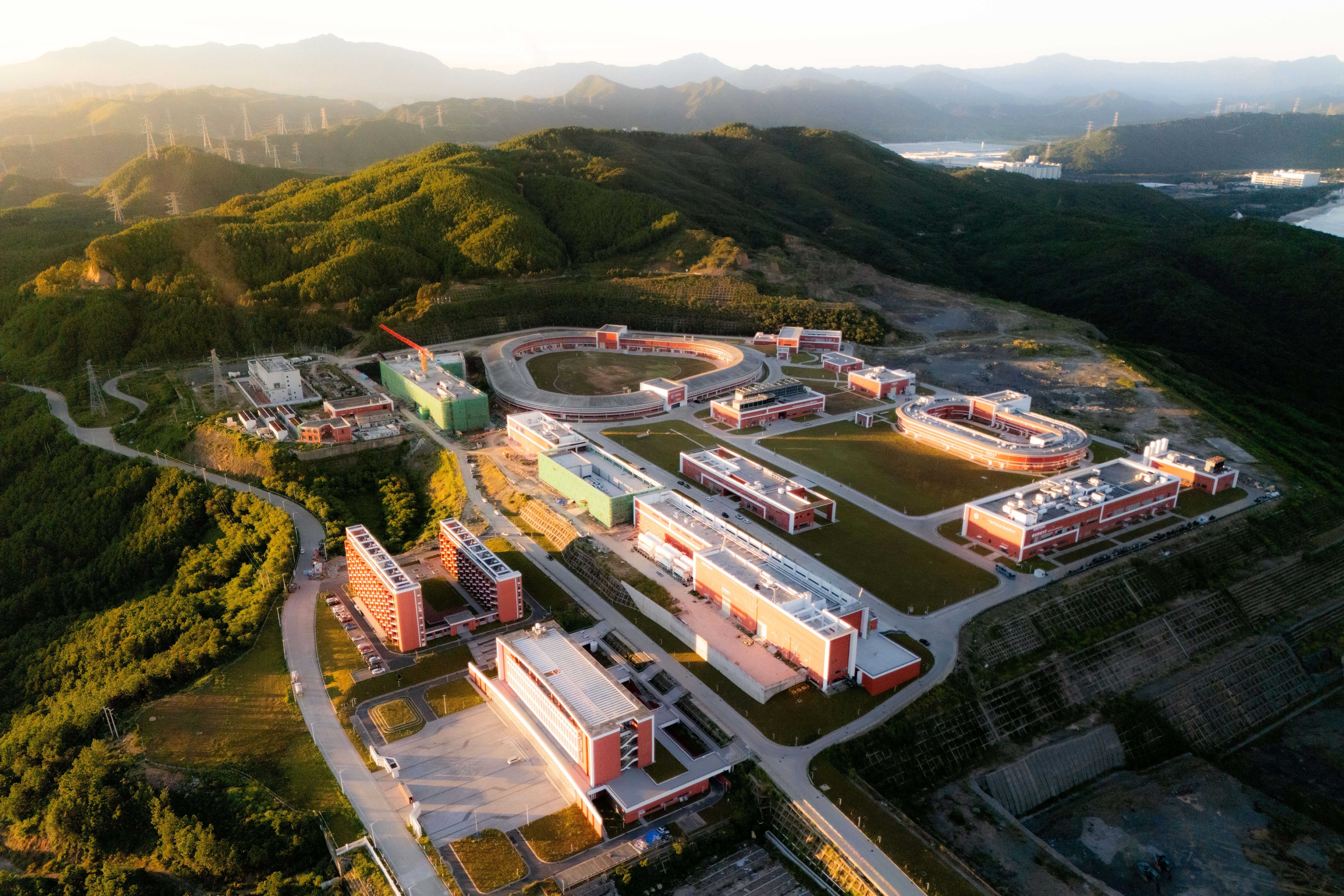
The High Intensity Heavy-ion Accelerator Facility (HIAF) in Huizhou China has completed its construction, and has been running for experiments. HIAF is composed of a superconducting ion linear accelerator, a high-energy synchrotron booster, a high-energy radioactive isotope beam line, an experimental storage ring, and a few experimental setups.  HIAF can provide high-intensity ion beams from hydrogen to uranium for various experiments including studies of exotic nuclear structure, superheavy nuclei, nuclear matter and hypernuclei. For example, 209Bi ions of 3.16×10^10 particles per pulse with an energy of 851 MeV/u has been generated stably and stored in the booster. As a scientific user facility, scientists around the world are welcome to join HIAF activities. The primary scientific goals of HIAF include:

  • to explore the limits of the existence of nuclides in terms of proton and neutron numbers as well as mass number;
  • to find new exotic structure of weakly-bound nuclei, and reveal new physics beyond;
  • to understand the origin of chemical elements including heavy elements from iron through uranium in the Universe.

On this occasion, we plan to organize the Frontier Nuclear Physics Symposium Related to HIAF, dedicated to physics program @HIAF.

The workshop will be co-organized by Southern Center for Nuclear-Science Theory (SCNT), State Key Laboratory of Heavy Ion Science and Technology, and Institute of Modern Physics (IMP).

Date: 13 Apr, 2026 (arrival day) - 18 Apr, 2026 (departure day)

Venue: Institute of Modern Physics (Huizhou  Campus), Chinese Academy of Sciences, Huizhou, China.
 
Organizing committee:
Xiaohong Zhou (co-chair, IMP)
Furong Xu (co-chair, PKU&SCNT)
Xinxing Xu (IMP)
Jianguo Li(IMP)
Xing Xu (IMP)
Bingshui Gao (IMP)
Qin Xue (secretary, SCNT&IMP)
 
Contact:
Jianguo Li (IMP)    jianguo_li@impcas.ac.cn
Xing Xu (IMP)         xuxing@impcas.ac.cn
Starts
Ends
Asia/Shanghai
Institute of Modern Physics (Huizhou  Campus), Chinese Academy of Sciences, Huizhou, China.

Transportation:
Address of the IMP Campus : No.1 Xinqiao North Road, Huizhou City (Huizhou Research Department of Institute of Modern Physics, Chinese Academy of Sciences)

In Chinese : 惠州市惠城区河南岸新桥北路1号(中国科学院近代物理研究所惠州研究部)

Arrival at Airport:

A. Pingtan Airport (平潭机场): Located in Huizhou. It is approximately 30 kilometres away from the campus, with an estimated travel time of about 40 mins by taxi.

B. Shenzhen Bao'an International Airport  (深圳宝安国际机场):  Approximately 110 kilometres away from the campus and estimated travel time of about 1.5 hours. Transportation options include:

(i) Taxi: from airport to Huizhou campus directly.

(ii) Bus: from airport to Huizhou, then taxi to campus.

C. Guangzhou Baiyun International Airport (广州白云国际机场): Approximately 160 kilometres away from the campus and estimated travel time of about 2 hours. Transportation options include:

(i) Taxi: from airport to Huizhou campus directly.

(ii) Bus: from airport to Huizhou, then taxi to campus.

D. Hong Kong International Airport (香港国际机场): Approximately 130 kilometres away from the campus. Transportation options include:

(i) Take the subway to West Kowloon Station, then a train to Huizhou Station, followed by taxi or bus to the campus.

(ii) Take a ferry to Shenzhen, then a taxi or bus to Shenzhen Train Station, followed by train to Huizhou Station, and finally a taxi or bus to the campus.

Note: Please check visa requirements for Hong Kong from your country before scheduling your trip via Hong Kong.

Arrival at Train Station:

A. Huizhou North Railway Station (惠州北站): High-speed trains, about 26 kilometres far from the campus and approx. 40 mins to campus by taxi. 

B. Huizhou Railway Station (惠州站): Regular-speed trains, about 19 kilometres far from the campus and approx. 30 mins to campus by taxi. 

C. Huizhou South Railway Station (惠州南站): High-speed trains, about 9 kilometres far from the campus and approx. 20 mins to campus by taxi.

Registration
Registration for this event is currently open.
Your browser is out of date!

Update your browser to view this website correctly. Update my browser now

×